
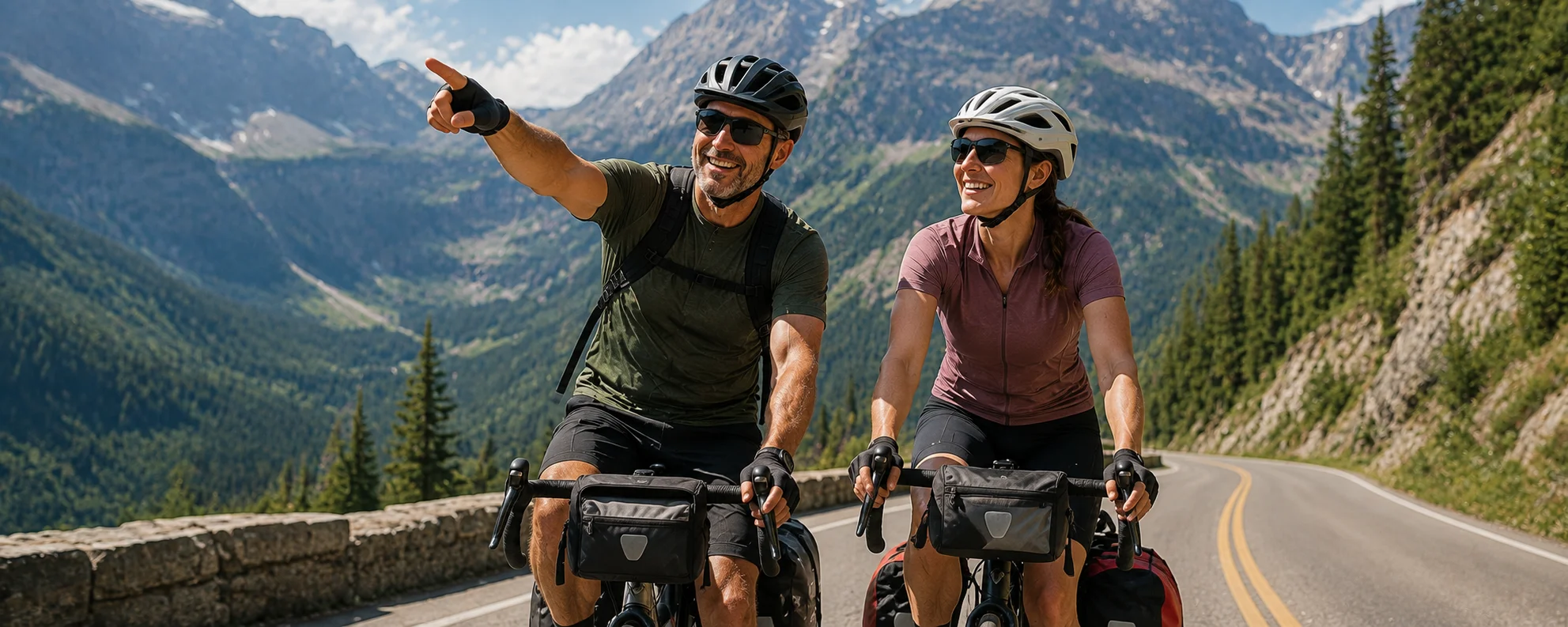
Going-to-the-Sun Road was completed in 1932 after eleven years of construction that literally carved a route into the mountainside — and on a bike, you feel every bit of that ambition. It's one of the great road climbs in the U.S. national park system: a steady, scenic grind up glacially-carved valley walls, past waterfalls and hairpin turns, to Logan Pass at 6,646 feet on the Continental Divide.
This guide covers the route options and their real distance and elevation numbers, the summer hour restrictions you need to plan around, the spring "car-free" window that serious cyclists build entire trips around, and what you need to know about riding it on an e-bike.
Stats shown for the most-recommended starting point, Lake McDonald Lodge. See route options below for the full-length and Avalanche Creek variants.
In short: Once the road is fully open to cars (usually late June), bikes are barred from the Apgar–Logan Pass section eastbound 12–6pm and westbound 3–6pm. Ride early morning or evening in summer, or aim for the spring car-free window before the road opens to vehicles. E-bikes under 750W are welcome everywhere regular bikes are.
Route Options & Elevation
"The climb" means different things depending on where you start. The first few miles along Lake McDonald are close to flat, so most cyclists who want a serious climbing day start further up the road, past the lake. Here are the three most common options, based on figures published by local outfitters and cycling route trackers:
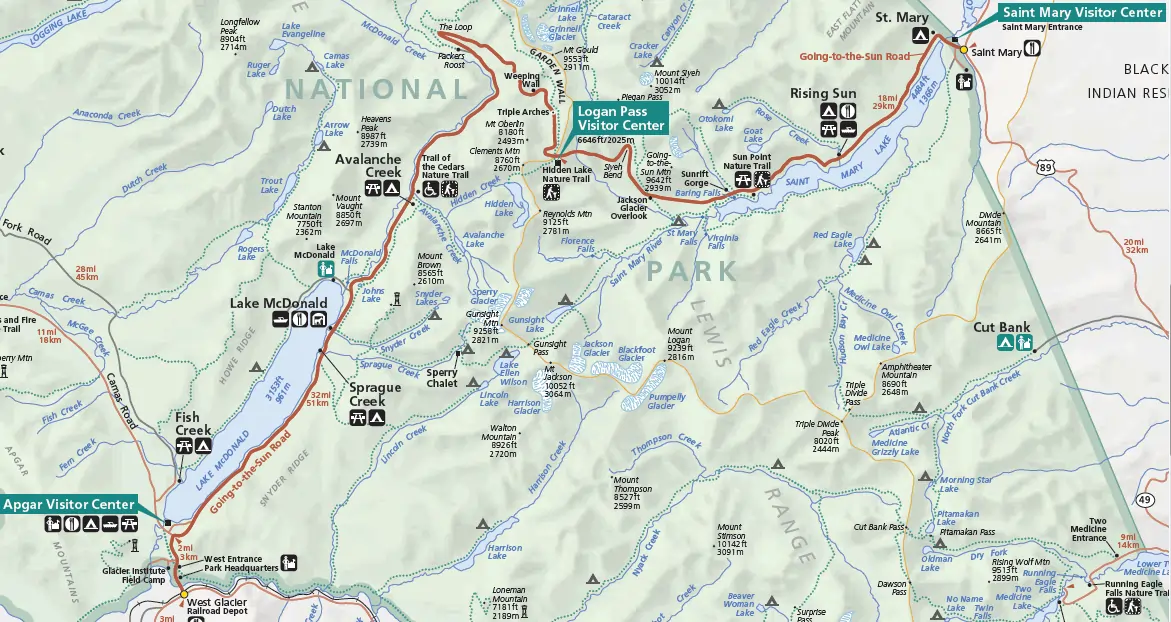
The complete west-side ride, start to finish — from the foot of Lake McDonald all the way to Logan Pass. Includes the flat lakeside miles as a warm-up. Sources vary on the exact elevation total depending on how they measure rolling terrain; treat it as a full, all-day undertaking either way.
The most frequently recommended starting point — it skips the flattest lakeside stretch and gets you into the climbing sooner, while still giving you the full McDonald Creek valley and the Loop.
Where the real climbing begins — this is where the road starts its steady ascent past the Weeping Wall and West Side Tunnel. Popular with strong riders who want to skip straight to the hard part.
Whichever start point you choose, most of the elevation gain is packed into the final stretch — roughly the last 12 miles average around 6%, past landmarks like Logan Creek, the Weeping Wall, and The Loop, Going-to-the-Sun Road's signature hairpin turn — before the road tops out at Logan Pass Visitor Center on the Continental Divide.
Route figures vary by source — cycling trackers, local outfitters and NPS materials don't always agree to the mile or the foot, since "the climb" gets measured from different start points. Treat the numbers above as a solid planning estimate, not a survey-grade figure.
The Spring Car-Free Window
Every year, road crews begin plowing Going-to-the-Sun Road in early April, and it takes months to clear the full route to Logan Pass. The road typically doesn't open to vehicle traffic until late June or early July — but once a section is plowed and safe to walk or ride, cyclists and pedestrians are allowed on it well before cars are. That gap, usually running through May and into June, is the closest thing to having Going-to-the-Sun Road to yourself.
Exactly how far you can ride depends on how far the plows have gotten and where the season's avalanche closures sit that year — it changes annually with snowpack, so there's no fixed date to plan around. Check the current road status on nps.gov before you go, especially if you're timing a trip specifically for this window.
If you're touring by bike and want to camp along the way, Glacier's campgrounds set aside dedicated hiker/biker sites for $8 per person per night — no advance reservation needed, just register on arrival.
Regulations & Safety
- Summer hour restrictions: from when the road is fully open to vehicles through late September, bikes are banned on the Apgar–Logan Pass section eastbound 12pm–6pm and westbound 3pm–6pm. These hours can change year to year — verify on nps.gov before you ride.
- Single file, always: when the road is open to vehicles, riding two abreast is prohibited.
- Pull-out rule: you're required to use turnouts to let traffic pass, and to stop completely if four or more vehicles stack up behind you.
- Lights: a white front light/reflector and red rear light/reflector are required between sunset and sunrise and in low visibility — relevant if you're riding the early-morning or evening windows around the restricted hours.
- No shoulder: most of Going-to-the-Sun Road has little to no paved shoulder. Ride defensively and don't assume drivers have room to give you space on blind curves.
- Wildlife: stay at least 100 yards from bears and wolves, 25 yards from all other wildlife. Carry bear spray somewhere you can reach it while riding, not buried in a pannier.
- Closures are enforced: sections of the road close temporarily for avalanche danger, rockfall or storm damage — these closures are strictly enforced and apply to cyclists just like vehicles. Don't cross a closure barrier.
- Weather: conditions near Logan Pass can turn cold and wet even in July, with snow possible at any time of year. Pack a real layer for the descent — you'll be sweating on the way up and chilled fast on the way down.
E-Bikes on Going-to-the-Sun Road
E-bikes are a genuinely good option here, and demand for them has grown fast. Glacier's rule: an e-bike qualifies if its motor is under 750 watts (1 hp) and only assists while you're actually pedaling — the motor can't propel the bike on its own except where regular motor vehicles are also allowed. Under that definition, e-bikes are allowed anywhere a traditional bicycle is allowed, including the full length of Going-to-the-Sun Road. Throttle-only electric bikes don't meet the definition and aren't permitted.
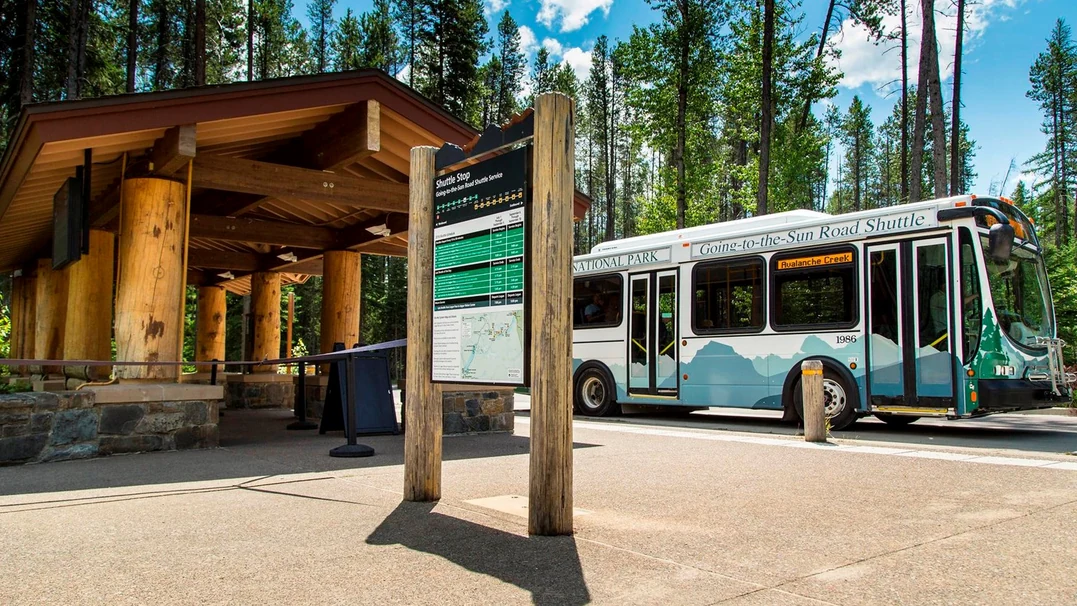
Battery range is rarely the limiting factor — most rental e-bikes are rated for 30–50 miles of pedal-assist range, enough to cover even the full Lake McDonald-to-Logan Pass distance on a charge. The practical constraint is usually the rental company's own policy: some local outfitters don't allow their e-bikes on the busiest, narrowest stretch near Apgar Village during peak season for safety reasons, and instead shuttle riders and bikes further up the road to start. Ask your rental shop exactly where their e-bikes are permitted before you book.
Local rental shops in Apgar Village — including Glacier Outfitters and Flathead Outdoors — rent e-bikes specifically set up for this climb, and some offer guided rides if you'd rather not tackle the route on your own.
Prefer a Guided Ride?
If you'd rather not plan the logistics yourself, local outfitters based in Apgar Village run guided and self-guided bike and e-bike experiences on Going-to-the-Sun Road, typically including the bike, helmet and route guidance. It's a solid option if you're short on time, unfamiliar with road cycling in traffic, or just want route knowledge from people who ride it constantly. See the Biking hub for rental shop details.
Frequently Asked Questions
Can you bike Going-to-the-Sun Road in Glacier National Park?
Yes — it's one of the most iconic road rides in the U.S. national park system. In summer, once the road is fully open to vehicles, bikes are prohibited on the Apgar-to-Logan Pass section eastbound 12–6pm and westbound 3–6pm. Outside those hours, and especially during the spring car-free window, cyclists have much freer access.
Are e-bikes allowed on Going-to-the-Sun Road?
Yes. E-bikes with a motor under 750 watts that only provide assistance while you're pedaling are allowed anywhere traditional bicycles are allowed, including this road. Throttle-only electric bikes don't qualify.
How hard is it to bike Going-to-the-Sun Road?
The climb from Lake McDonald Lodge to Logan Pass is about 21 miles one-way with roughly 3,400 feet of gain, most of it above Avalanche Creek at an average grade around 6%. It's a serious, all-day effort for a fit cyclist.
When is the best time to bike it without car traffic?
Late spring, after the road is plowed but before it opens to vehicles — typically May into early June, though the exact window shifts every year with snowpack. Check nps.gov for the current road status before planning around it.