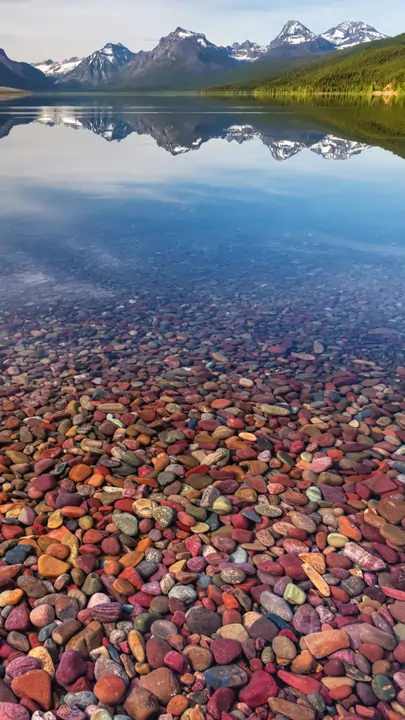
The famous Rainbow Rocks at Lake McDonald get their red, green, blue, purple and orange colors from ancient argillite rocks formed more than 1.5 billion years ago. Different levels of iron and oxygen during their formation created the vibrant colors that visitors see today along the shores of Glacier National Park.
| Best location | Apgar Beach |
| Colors | Red, green, blue, purple, orange and white |
| Rock type | Argillite and siltite |
| Age | About 1.5 billion years |
| Can you take them? | No — collecting rocks is illegal |
| Best time for photos | Morning and sunset |
| Visible underwater? | Yes, thanks to the lake's clear water |
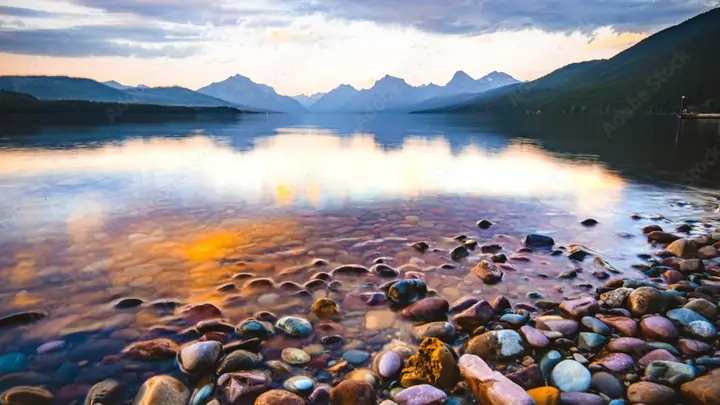
The Rainbow Rocks on the shores of Lake McDonald are one of the most recognizable and photographed features in Glacier National Park. Visitors often nickname this stretch of shoreline the "rainbow rock beach": red, green, purple, teal, white and gold — the beach looks like someone scattered a treasure chest across the lakebed. The colors aren't paint or mineral deposits. They're the result of over a billion years of geological history, and the story behind them is as beautiful as the rocks themselves.
What Kind of Rocks Are They?
The Rainbow Stones are predominantly argillite and siltite — ancient sedimentary rocks formed from fine-grained mud and silt that settled on the bottom of a shallow inland sea approximately 1.5 billion years ago during the Precambrian era. These sediments were compressed over millions of years into the layered rock that now makes up most of Glacier National Park's peaks and shorelines.
What makes Lake McDonald's colored rocks so striking is that they come from the Grinnell Argillite and Appekunny Argillite formations — two distinct rock layers with dramatically different colors that were transported to the lakebed by glaciers, streams and avalanches, then polished smooth by centuries of wave action.
Why Does Lake McDonald Have Colored Rocks?
The key insight: it's all about iron and oxygen. The same iron mineral that makes blood red (hematite, iron oxide) makes red argillite red. When that same iron is in a low-oxygen environment, it forms a different mineral (chlorite) and turns green. The layer-cake structure of Glacier's rocks means red and green formed alternately over millions of years, creating the striped sequence visible in the valley walls and concentrated on the lake floor.
How Did They Get to the Lake?
The rainbow-colored rocks on Lake McDonald's shores arrived via a combination of forces operating over thousands of years:
- Glacial erosion: The massive glaciers that carved Lake McDonald valley ground the surrounding rock into fragments, incorporating stones from formations miles away
- Glacial outwash: As glaciers melted, they deposited their rock loads into stream systems that fed the lake
- McDonald Creek and tributaries: The creek draining into the west end of the lake continuously carries argillite fragments from the upper watershed
- Wave action: Over centuries, the lake's wave action rounds and smooths the stones and gradually concentrates the colorful pebbles along the shoreline
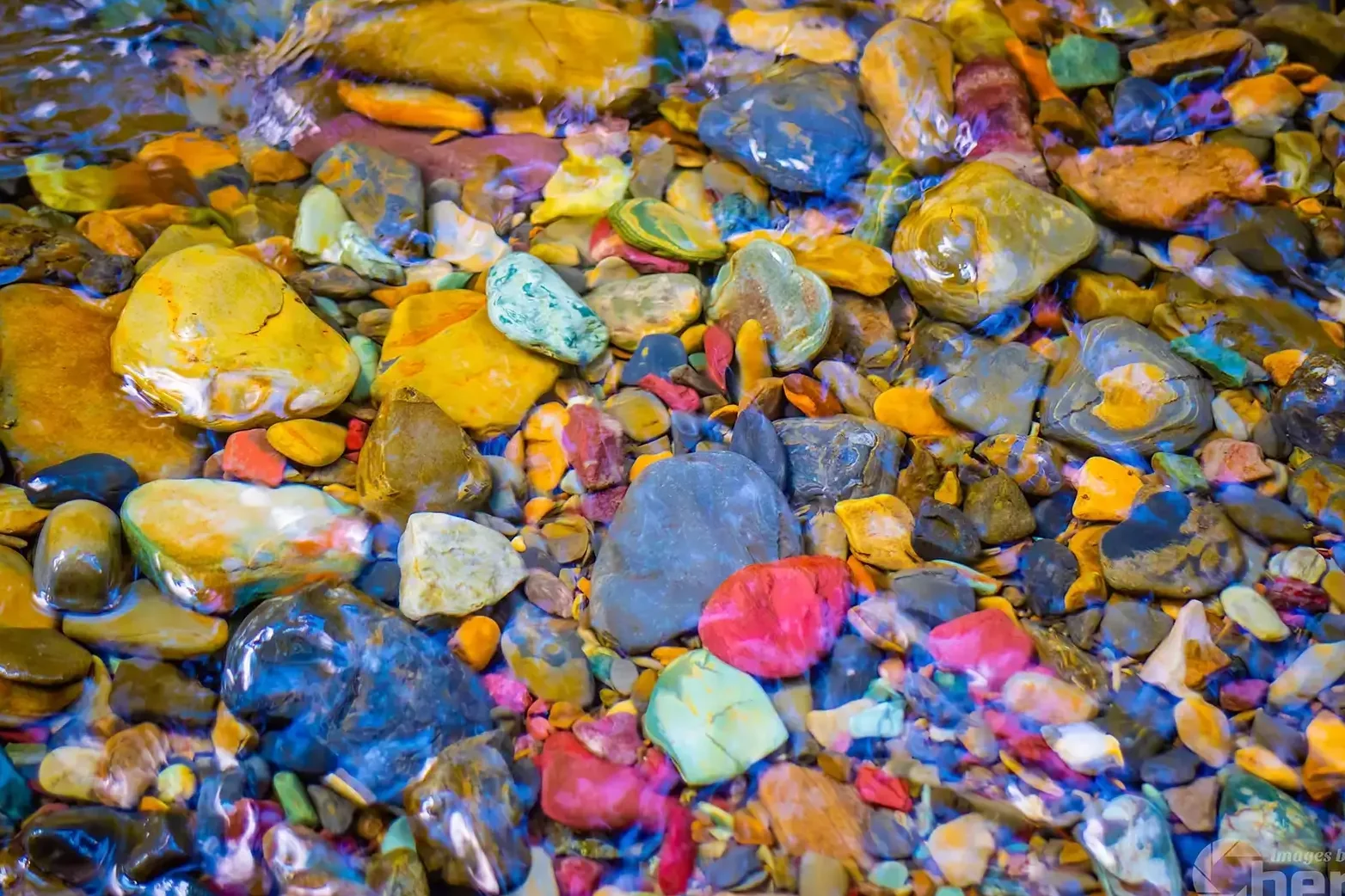
Why Are They So Vivid When Wet?
Dry, the Rainbow Stones are attractive but somewhat muted. Wet — either in the shallows or freshly rinsed by a wave — they become intensely saturated. This happens because water fills in the microscopic surface texture of the rock, reducing scattering of light and allowing the mineral color to show through more purely. It's the same reason any smooth stone looks more vivid when wet.
For the best photographs: visit in the morning when the beach is in shadow (the colors pop better without harsh direct sun), get close to the waterline where stones are perpetually wet, and shoot in the shallows where the lake is shallow enough to see colored pebbles on the bottom from above.
Where to See Them Best
The best place to see Rainbow Rocks at Lake McDonald is Apgar Beach on the lake's western shore. This Lake McDonald pebble beach is the most accessible location and the area featured in most of the photographs visitors see online. The beach is reachable directly from the Apgar parking area — no hiking required.
From the water — whether on a boat tour, kayak or paddleboard — you can look straight down through the extraordinarily clear water and see the pebble mosaic covering the lake bottom, visible to depths of 10–15 feet on calm days. The colors are perhaps most striking from this angle. Boat tours guide →
No collecting: Removing Rainbow Rocks from Glacier National Park is illegal under federal law. The colored stones on the beach are there for everyone to see — please leave them exactly where you found them. Penalties can be significant.
Can You Take Rocks From Lake McDonald?
No. Removing Rainbow Rocks from Lake McDonald or any other area of Glacier National Park is prohibited by federal law. Even small stones are protected because they are part of the park's natural resources.
Although many visitors are tempted to take a colorful pebble home as a souvenir, park regulations require all rocks, plants and natural objects to remain where they are found. Taking photos is encouraged — taking rocks is not.
Why Do People Call Lake McDonald the Rainbow Lake?
Lake McDonald is often called the "Rainbow Lake" or "rainbow pebble lake" because of the thousands of colorful pebbles visible beneath its crystal-clear water. The combination of red, green, purple, blue and orange stones creates a rainbow-like appearance unlike any other lake in Glacier National Park.
Many visitors discover the lake through photographs of these famous Rainbow Rocks, which have become one of Glacier's most recognizable natural features.
Rainbow Rocks Lake McDonald Location
The Rainbow Rocks are most concentrated and easiest to reach at Apgar Beach, located at the western end of Lake McDonald at approximately N 48.494°, W 113.990°.
To get there, enter Glacier National Park through the West Glacier entrance and follow Going-to-the-Sun Road east for about 1 mile to Apgar Village. The main Apgar parking lot is large and free to use once inside the park (park entrance fee required). From the parking area, the pebble beach is less than a 5-minute walk.
No trail or special gear is needed. Walk directly to the shoreline and you will find the Rainbow Rocks immediately at the water's edge and visible across the lake bottom in the shallows. Most of the photographs you see of Lake McDonald's colored rocks were taken right here.
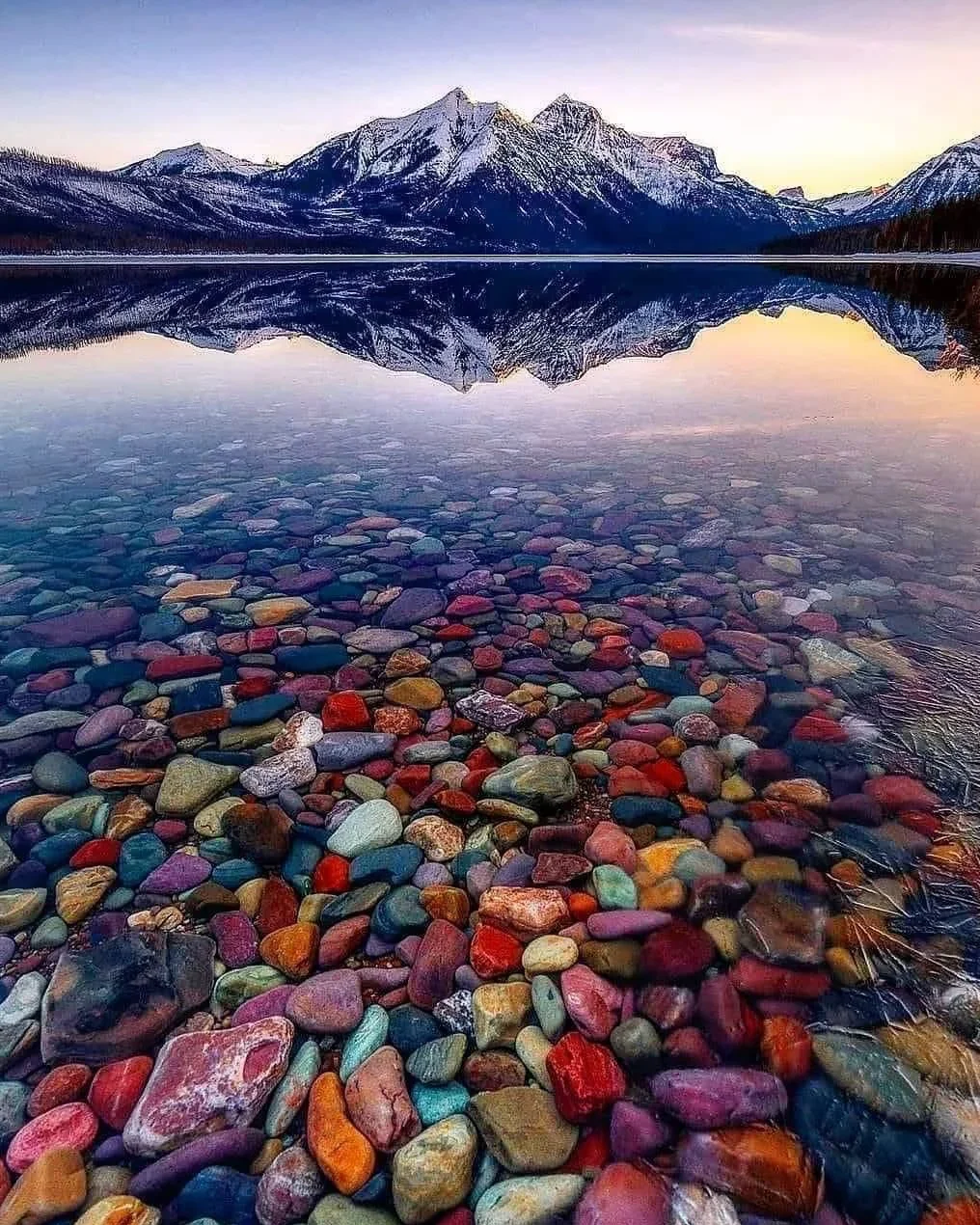
When Is the Best Time to See Rainbow Rocks at Lake McDonald?
For the clearest water and most vivid colors, visit between mid-July and September. Spring snowmelt (April–June) temporarily increases sediment flowing into the lake, reducing visibility to the lake floor. By mid-summer the runoff has slowed and settled, and the Rainbow Rocks on the bottom are at their most visible and intensely colored.
For photography, early morning is the best time of day. The beach is still in shade, eliminating harsh shadows on the stones. The lake surface is calm — no afternoon wind chop — and the rocks at the waterline are wet and fully saturated in color. Overcast mornings often produce the most evenly lit conditions for close-up shots of the pebbles. Midday direct sun creates surface glare that makes it harder to see through the water. Sunset is the second best window, when alpenglow warms the peaks in the background.
The Bigger Picture — Glacier's Ancient Geology
The argillite pebbles are a small sample of one of the most intact and accessible records of Precambrian geology on Earth. The Proterozoic sedimentary rocks that form Glacier National Park are among the oldest exposed sedimentary sequences anywhere — and because they were never deeply buried or metamorphosed, they preserve structures (ripple marks, mud cracks, stromatolites) that are normally destroyed in older rocks.
When you hold a red argillite pebble from Lake McDonald's shore, you're holding a piece of rock that formed in a shallow sea before complex animal life existed on Earth — before fish, before dinosaurs, before the continents assumed their current positions. The mountains around you are essentially a window back 1.5 billion years. The lake just happens to have polished those windows into perfect viewing stones and laid them out at your feet.
The Apgar Visitor Center has a geology exhibit with rock samples and cross-sections of the lake valley formations. If you want to understand the landscape more deeply, it's worth 20 minutes before or after your beach walk.
Frequently Asked Questions
The colors come from different types of ancient argillite rock that formed under varying oxygen conditions over 1.5 billion years ago. Iron oxide creates reds and oranges; reduced iron creates greens; transition zones between layers create purple and violet.
The best location is Apgar Beach, although colorful rocks can be found along much of Lake McDonald's shoreline.
No. Removing rocks from Glacier National Park is prohibited by federal law.
Most are argillite and siltite, ancient sedimentary rocks common throughout Glacier National Park.
Water reduces light scattering and makes the natural mineral colors appear more saturated.
Early morning and late afternoon usually provide the best lighting and reflections.