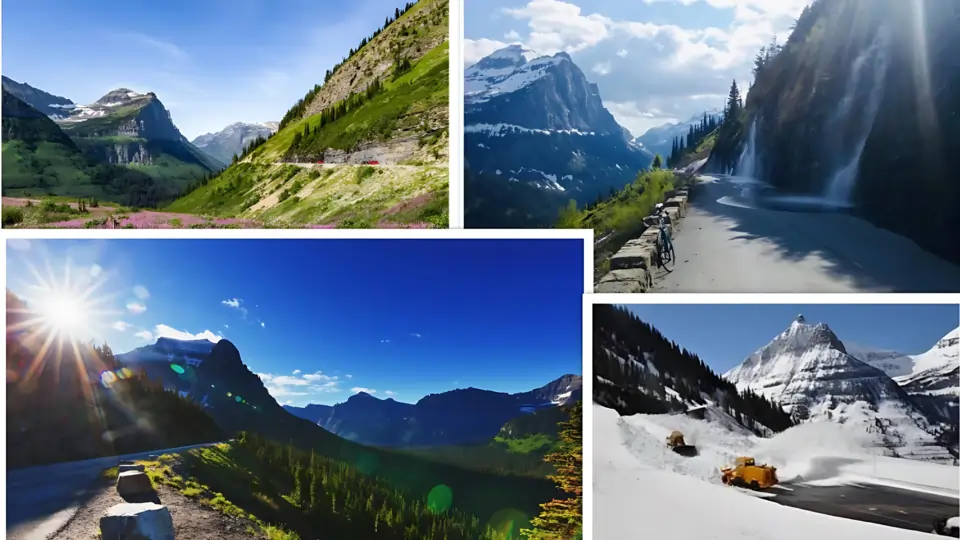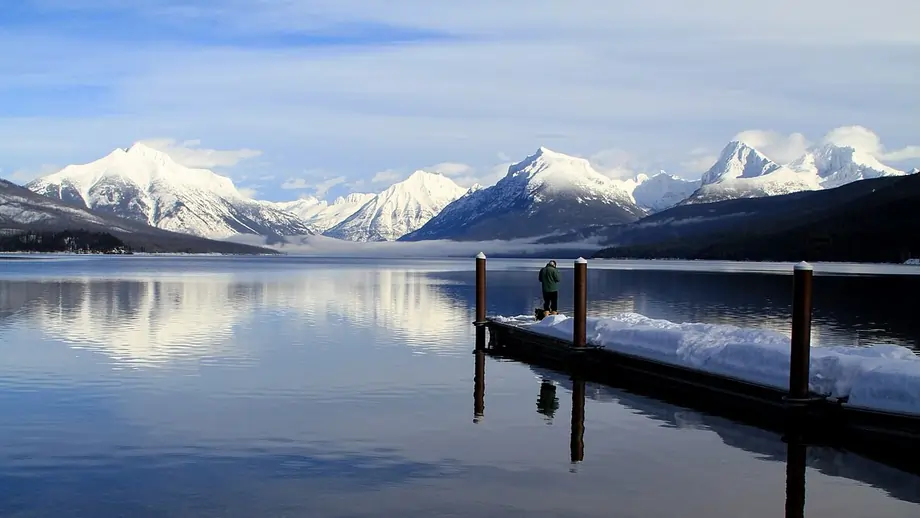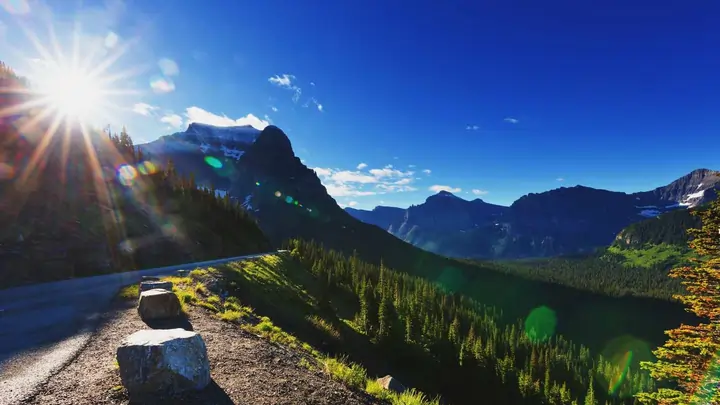
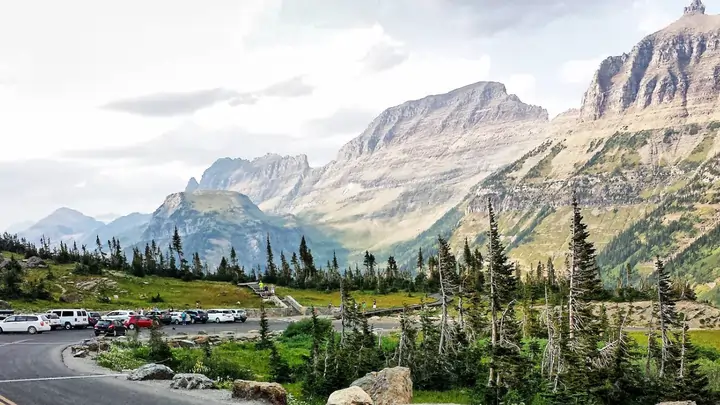
Glacier National Park weather does not negotiate. A clear morning at Lake McDonald can become a lightning storm at Logan Pass by noon. A July afternoon that starts at 80°F at the lakeshore drops to 50°F at the summit — sometimes with snow. The visitors who have trouble are the ones who pack for a single forecast. The ones who have great trips pack for the mountain's full range.
This guide covers the science behind Glacier's climate, what each month actually looks like at ground level, and the specific safety situations you need to know about before you go anywhere near the backcountry.
- Logan Pass Webcam — The NPS runs a live cam at Logan Pass (9,642 ft). If it shows clouds stacking or snow on the ridge, afternoon conditions will be rough above tree line.
- NOAA Backcountry Forecast — The Kalispell forecast office issues a dedicated Glacier Backcountry zone forecast. Search "Glacier National Park backcountry NOAA" and look for the specific zone covering your trailhead elevation.
- Air Quality Index (AQI) — Late July through September, wildfire smoke from Idaho, Washington, and Canada can push AQI into the unhealthy range. Check AirNow.gov before planning a strenuous high-elevation day.
The Science of Glacier's Climate: Elevation & the Continental Divide
Glacier National Park straddles the Continental Divide — the spine of the Rocky Mountains — and that single geographic fact explains almost every weather pattern you'll encounter. The Divide acts as a wall between two fundamentally different climate systems.
Pacific Maritime climate. Moisture flows in from the Pacific Ocean across Idaho and gets funneled into the valley. The result: mild temperatures year-round, higher rainfall, and lush old-growth cedar and hemlock forests. Rain is frequent but rarely severe. Winters are wetter than colder.
Arctic Continental climate. Cold air from Canada sweeps down with no mountains to slow it. Temperatures drop faster, wind speeds are dramatically higher, and weather changes happen in minutes rather than hours. If you're hiking at Many Glacier, treat every exposed ridge as you would an alpine summit.
The Elevation Rule: For every 1,000 feet of elevation gain — for example, driving from Lake McDonald (3,153 ft) to Logan Pass (9,642 ft) — the temperature drops by roughly 3.5°F to 5°F (2°C to 3°C). That's a potential 23°F difference between the lakeshore and the pass. Always dress for the highest point of your day, not where you parked.
Weather in Glacier National Park by Month
These are meteorological conditions, not hotel or permit availability — for booking windows, see the Lake McDonald booking guide.
-
May Wettest Month
May is statistically the wettest month in the Lake McDonald valley. Expect frequent rain, lingering snowpack at elevation, and temperatures swinging between 35°F and 65°F. High trails are buried under several feet of snow — high-loop routes like the Highline Trail are completely inaccessible. The real hazard is rain-soaked hypothermia: temperatures may seem mild, but wet clothing at 45°F with wind is dangerous. Snowmelt-fed waterfalls are at maximum force. Avalanche Lake trail and the Trail of the Cedars are accessible and spectacular.
-
June Transitional
June is a month of rapidly shifting conditions. Lower trails like Avalanche Lake clear of snow by early June. Upper routes — Highline, Sperry, Gunsight Pass — remain snow-covered until late June or early July. Temperatures at the lake reach 70–80°F by mid-month, but Logan Pass stays cold (40s°F) and snow can fall at the summit any day of June. Afternoon thunderstorms become more frequent in the second half of the month as warm air builds from the south.
-
July & August Peak & Storm Season
The sunniest, warmest stretch: lake-level highs of 75°F–85°F (24°C–29°C) with cool nights in the 50s. All high trails are snow-free by mid-July. The primary hazard is afternoon convective thunderstorms — storm cells build over the Divide from roughly 1 pm onward and can bring lightning, hail, and rapidly dropping temperatures to exposed ridges within 30 minutes. Plan alpine hikes to summit or turn around by noon. Late August introduces the second major hazard: wildfire smoke. Regional fires in Idaho, British Columbia, and Washington frequently push smoke into Glacier, reducing visibility and spiking AQI. Because this is the dry weather window, lodge rooms and vehicle permits fill months in advance — secure your entry passes using our Lake McDonald booking guide.
-
September & October Rapid Cooling
September starts mild (50s–70s°F) but cooling happens fast. By the end of the month, overnight temperatures regularly drop below freezing at higher elevations. First heavy frosts hit the valley floor in October. Snow can fall at Logan Pass in September — sometimes significantly. Daylight hours shorten noticeably after the equinox, which compresses your hiking window. The upside: cleaner air (smoke season ends), no afternoon thunderstorms, and dramatic light as the larch trees turn gold.
-
November – April Severe Winter
The park enters full alpine winter. Heavy snow accumulation closes Going-to-the-Sun Road at the Avalanche Creek gate (typically November). Lake McDonald itself doesn't freeze — it's too deep — but the surrounding valley receives 100+ inches of snow in a heavy year. Wind chills at Logan Pass can exceed -40°F. The western approach to Avalanche Creek remains open for snowshoeing and cross-country skiing. No shuttle service, no lodge, and no gear rental inside the park are available — but gear rental, lodging and services are all accessible in nearby Whitefish. For a complete breakdown of what to expect, see our Lake McDonald winter guide.
Lake McDonald Weather: The West Side Microclimate
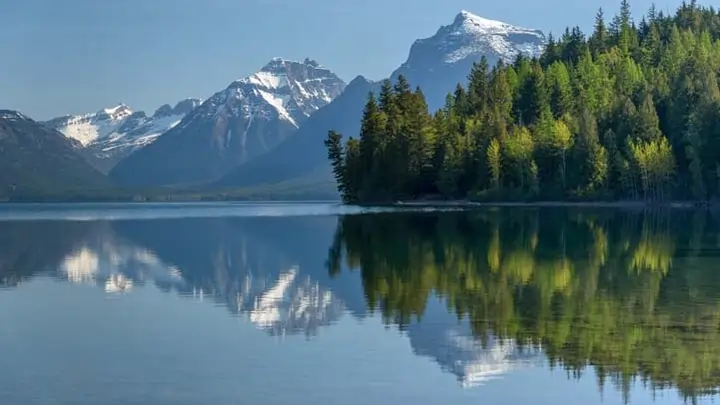
Lake McDonald is the largest lake in Glacier National Park — 10 miles long, 472 feet deep — and that thermal mass creates its own distinct microclimate within the broader Pacific Maritime pattern.
The Thermal Mass Effect: The sheer volume of cold water in Lake McDonald keeps the immediate valley slightly warmer in autumn than surrounding areas. The lake releases stored heat slowly as air temperatures drop in September and October, buffering overnight lows and extending the comfortable hiking window by a week or two compared to the east side. In summer, the opposite effect produces the morning fog and mist that makes early photography at the lake so magical — the relatively cool lake surface chills warm humid air rolling off the mountains, condensing it into low-lying cloud.
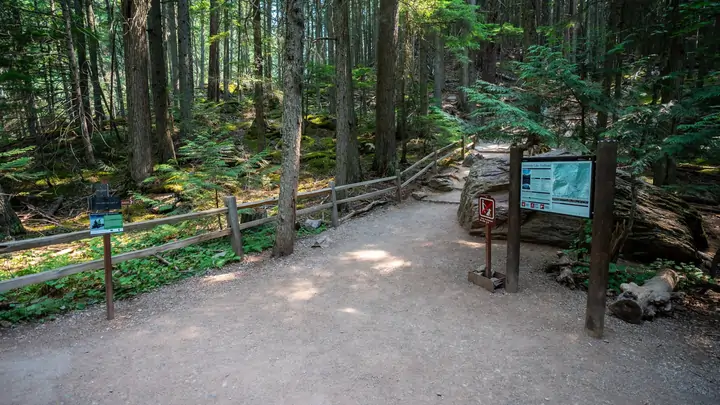
Rainy Day Strategy: When high-altitude hiking is rained out, the Lake McDonald valley still offers genuinely excellent options. The Trail of the Cedars is a boardwalk loop through old-growth cedar and hemlock that is arguably more atmospheric in the rain — the canopy keeps you dry and the forest smell is extraordinary. Lake McDonald Lodge itself is worth spending time in even if the mountains are socked in: the historic great hall, the lodge dining room, and the lakeshore dock are all covered or sheltered. The west shore road also stays open in most weather.
Backcountry Safety: How to Handle Severe Weather Alerts
Mountain weather emergencies follow predictable patterns — knowing them in advance is the difference between a scary story and a tragedy.
If you are caught on an exposed ridge — the Highline Trail, the Garden Wall, or any above-tree-line route — immediately descend below tree line. Do not seek shelter under a single isolated tree (it's the highest object and draws strikes). In a open area with no trees, crouch on the balls of your feet with your feet together, minimize your contact with the ground, and stay away from other people. The standard rule: if you can hear thunder, lightning is close enough to strike you. Start descending at the first rumble, not the first flash.
Hypothermia is a real and underestimated threat in July at Logan Pass. Snow can fall at the summit any month of the year, and wet cold at 45°F is more dangerous than dry cold at 30°F — wet clothing loses 90% of its insulating ability. Always carry emergency space blankets (they weigh nothing), a windproof outer layer, and a dry spare mid-layer in your pack. If anyone in your group starts shivering uncontrollably, shows confusion, or loses fine motor control, treat it as an emergency: get them out of the wind, replace wet layers, share body heat, and descend immediately.
Check AirNow.gov before any strenuous high-elevation hike from late July through mid-September. AQI 0–50 (Good) — no concerns. AQI 51–100 (Moderate) — sensitive groups should limit exertion. AQI 101–150 (Unhealthy for Sensitive Groups) — anyone with asthma or heart conditions should skip strenuous hikes. AQI 151+ (Unhealthy) — postpone any long backcountry day. At Sperry Chalet elevation (6,500 ft), you are breathing harder and taking in proportionally more particulate matter than at the lakeshore. High smoke days at the lake are significantly worse at altitude.
The Ultimate Weather-Proof Packing Checklist
Glacier's conditions demand a three-layer system regardless of the season. Every layer has a specific job — skip one and the system fails.
| Layer | Purpose | What to Pack | What to Avoid |
|---|---|---|---|
| Base Layer | Moisture wicking — pulls sweat away from skin | Merino wool or synthetic (polyester). Long-sleeve option for cool mornings. | Cotton in any form. Cotton retains moisture and becomes a cold, wet second skin. |
| Insulating Layer | Warmth — traps body heat | Synthetic puffy jacket or fleece mid-layer. Synthetic is preferred over down — it retains warmth when wet. | Down fill without a DWR coating. In Glacier's wet conditions, untreated down collapses and loses all insulating value. |
| Outer Shell | Wind and rain protection | Waterproof-breathable hardshell (Gore-Tex or equivalent). Full zip, hood included. | Water-resistant softshells. They handle light drizzle but fail in sustained rain — exactly what Glacier delivers in May, June, and September. |
| Extras | Safety & comfort margin | Wool or synthetic hat, gloves, gaiters for May/June, emergency space blanket, high-SPF sunscreen (UV is intense at elevation), sunglasses. | Leaving extras in the car because it looks sunny at the trailhead. Conditions at the summit are independent of conditions at the parking lot. |