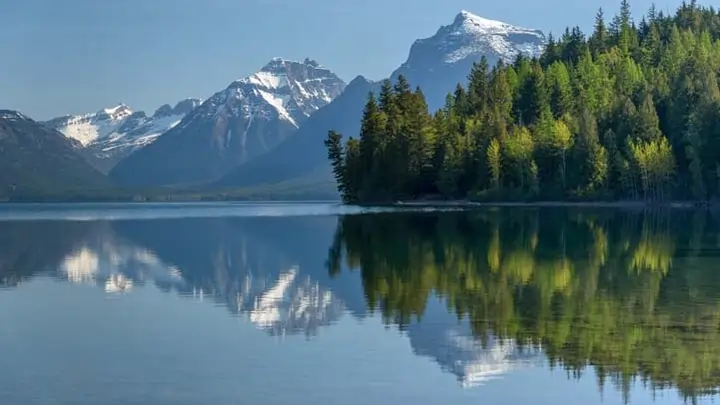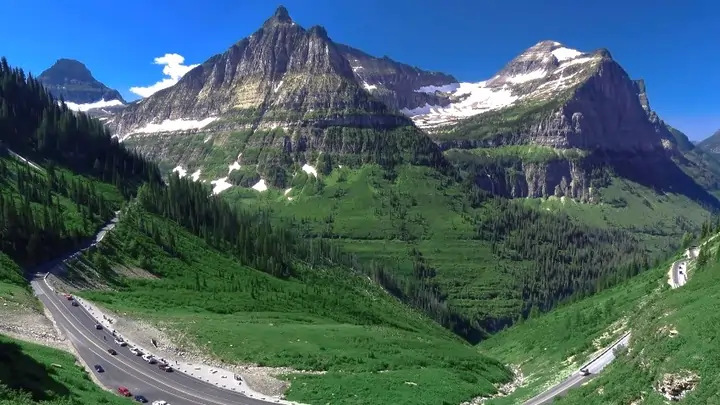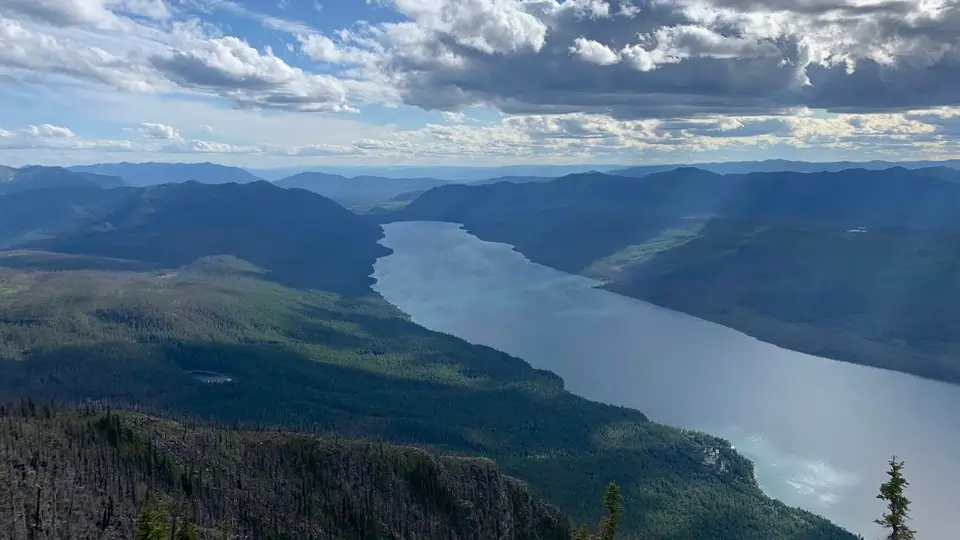
Glacier National Park's wildlife is not a background element — it is the point. The park protects one of the most complete temperate ecosystems remaining in North America, with every native predator and prey species still present: grizzly bears, wolves, wolverines, mountain lions, lynx. Lake McDonald and its valley occupy the park's western gateway, and the wildlife corridor here is extraordinary — the Going-to-the-Sun Road corridor and McDonald Creek see regular sightings of species that have been extirpated from most of the continent.
The western side of Glacier is particularly productive for wildlife watching because of the diversity of habitat compressed into a short distance. You can go from lakeside marsh (moose, herons, osprey) to old-growth cedar forest (bears, deer) to alpine meadow (mountain goats, bighorn sheep, grizzlies) within a single day. Dawn and dusk are universally the best times — bring binoculars and patience.
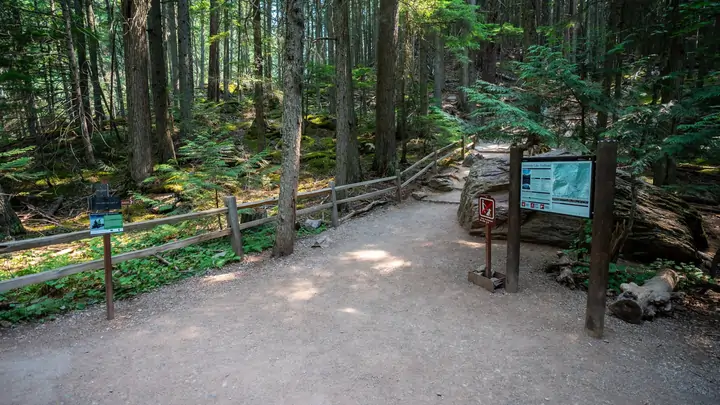
Bear spray is required on all trails. Carry it accessible — not buried in your pack. Know how to use it before you hike. Rentals available at Apgar Visitor Center and outdoor stores near West Glacier.
Featured Species
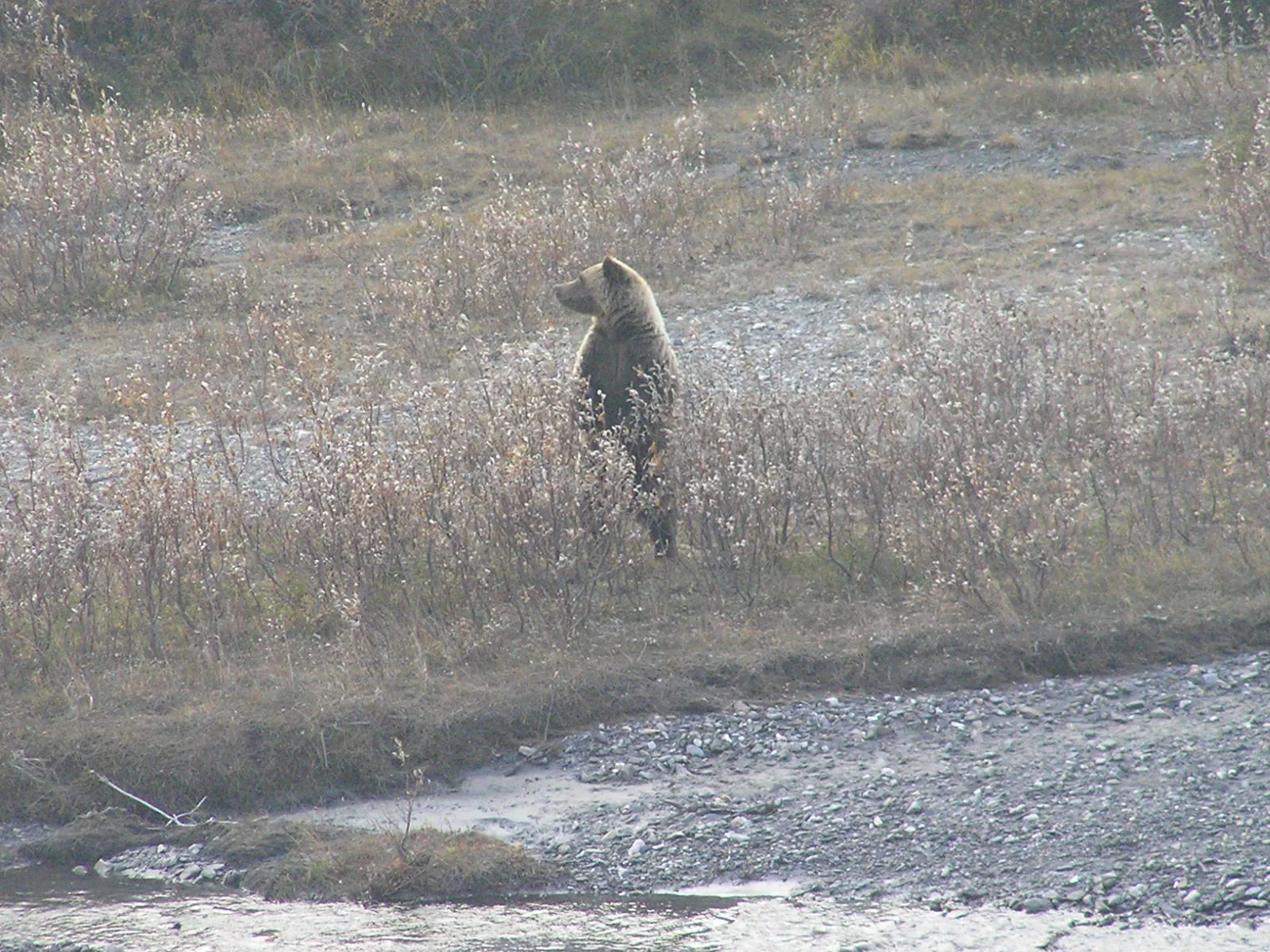
Glacier's grizzly population is one of the most intact in the lower 48. Estimates suggest 300+ grizzlies live within the park, and the Lake McDonald corridor is active territory. The grizzly is the undisputed symbol of the park — and the primary reason bear spray is mandatory on every trail.
Grizzlies in Glacier are most visible in spring (often near avalanche chutes eating emerging vegetation) and fall (in berry patches on mid-elevation slopes before hibernation). They are regularly seen along the Going-to-the-Sun Road and on the slopes above Lake McDonald Valley.
Identification: Hump behind the shoulders, concave face profile, short round ears. Varies from nearly black to pale blonde — color alone is not a reliable identifier. The shoulder hump is definitive.
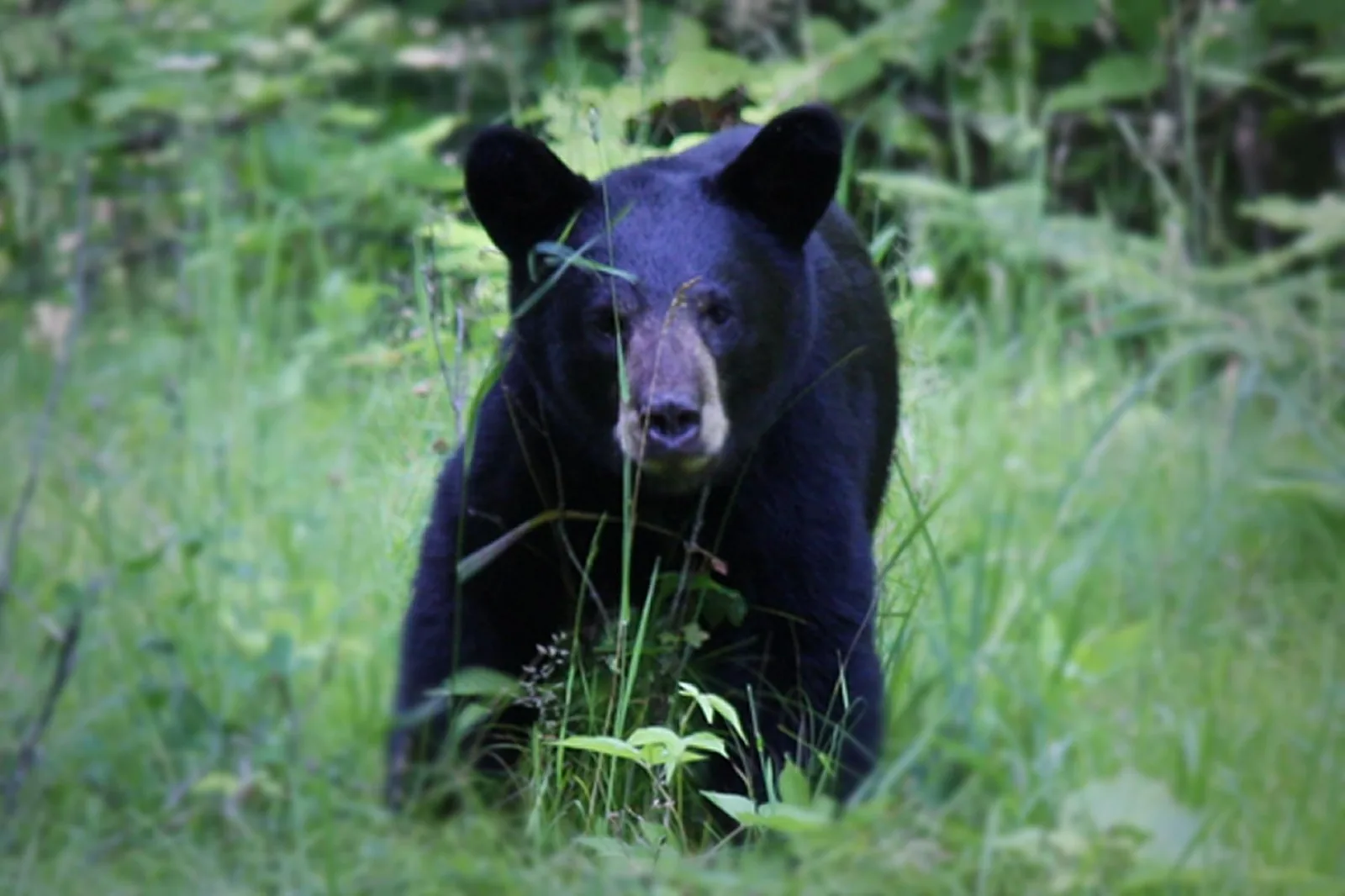
Black bears are more commonly seen than grizzlies throughout the Lake McDonald Valley. They favor the forest edges, berry patches and creek drainages, and are regularly spotted along the North Fork Road and the lower Going-to-the-Sun corridor.
Despite the name, black bears can be brown, cinnamon or even blonde in color. The key distinction from a grizzly is the lack of a shoulder hump, a straighter face profile, and taller, more pointed ears.
Black bears are generally less aggressive than grizzlies but should be treated with the same respect and distance — 100 yards minimum. Never approach or feed them. Treat all bears as potentially dangerous.
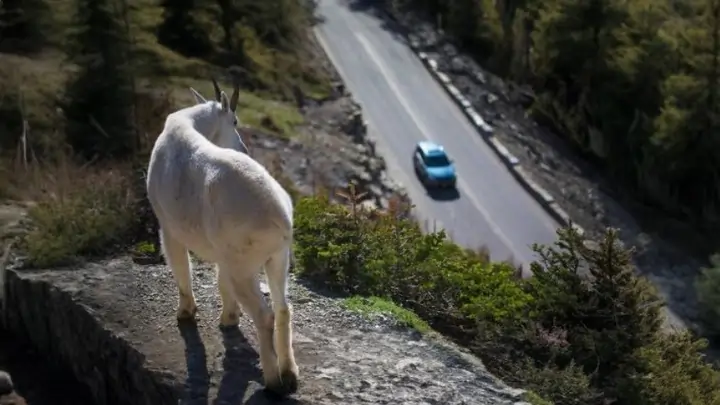
Mountain goats are Glacier's most reliably spotted large mammal. They live year-round in the high alpine zone and are completely at home on vertical cliff faces that no other large mammal — and few humans — can navigate. Their cloven hooves have hard outer edges for gripping and soft inner pads for traction.
The best place to see mountain goats near Lake McDonald is Logan Pass, where they regularly walk along the road and parking areas in search of mineral-rich road salt. They show virtually no fear of vehicles or people — which is why maintaining distance is entirely the visitor's responsibility.
Mountain goats are distinct from bighorn sheep: all-white coat, straight black horns (both sexes), and more compact body. They are present year-round but easier to see above treeline in summer.
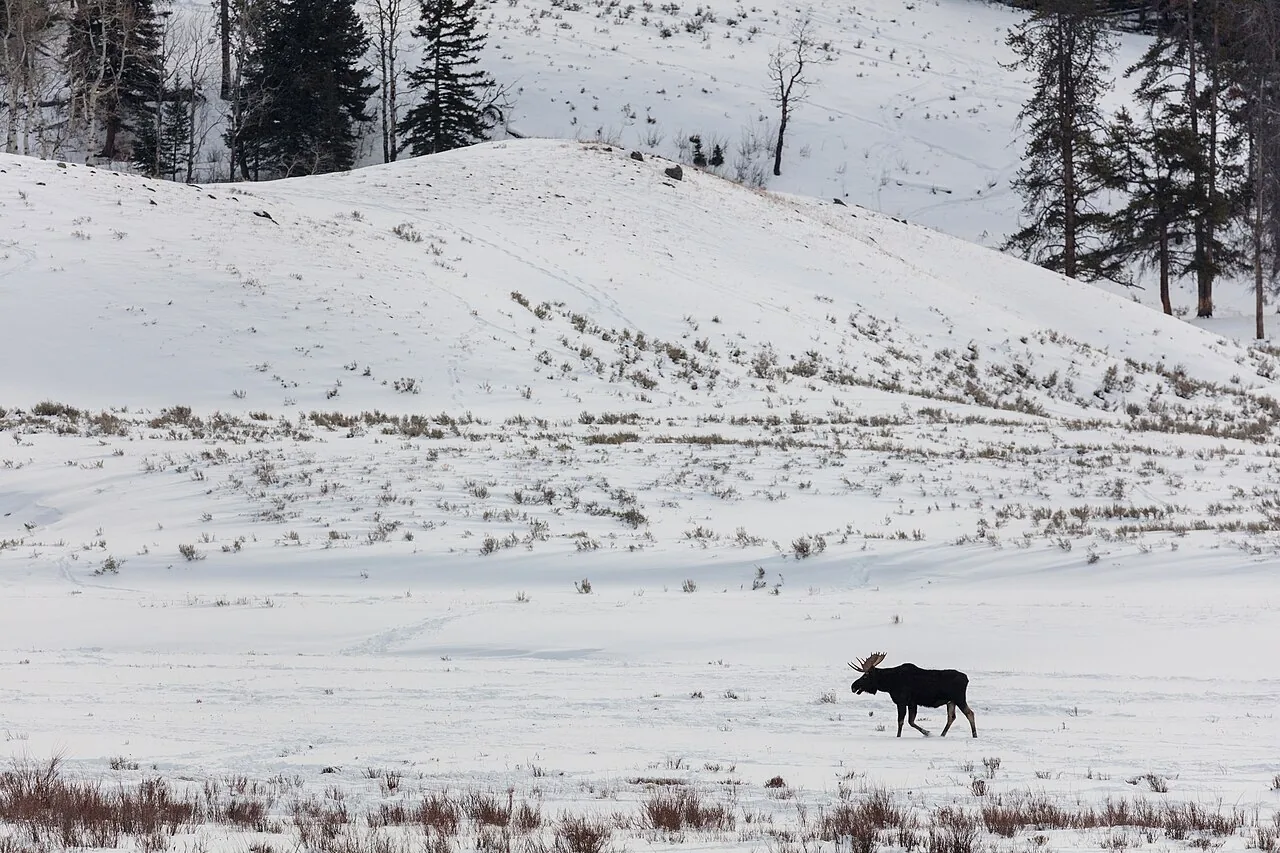
Moose are the largest member of the deer family, and Glacier's Shiras moose subspecies — found in the Northern Rockies — are spectacular animals. Bulls can exceed 1,000 pounds with antler spreads reaching 5 feet. Despite their size, moose are surprisingly quiet and can appear suddenly from dense vegetation.
McDonald Creek and the wetlands around the North Fork Flathead River are the most productive moose habitat in the western valley. Moose wade into willowy streams and marshy lake edges to feed on aquatic vegetation — dawn and dusk are the best viewing times when they're most active.
Important: Moose are unpredictable and should never be approached. A cow with calves is particularly dangerous. Give them at least 75 yards clearance and have an escape route in mind.
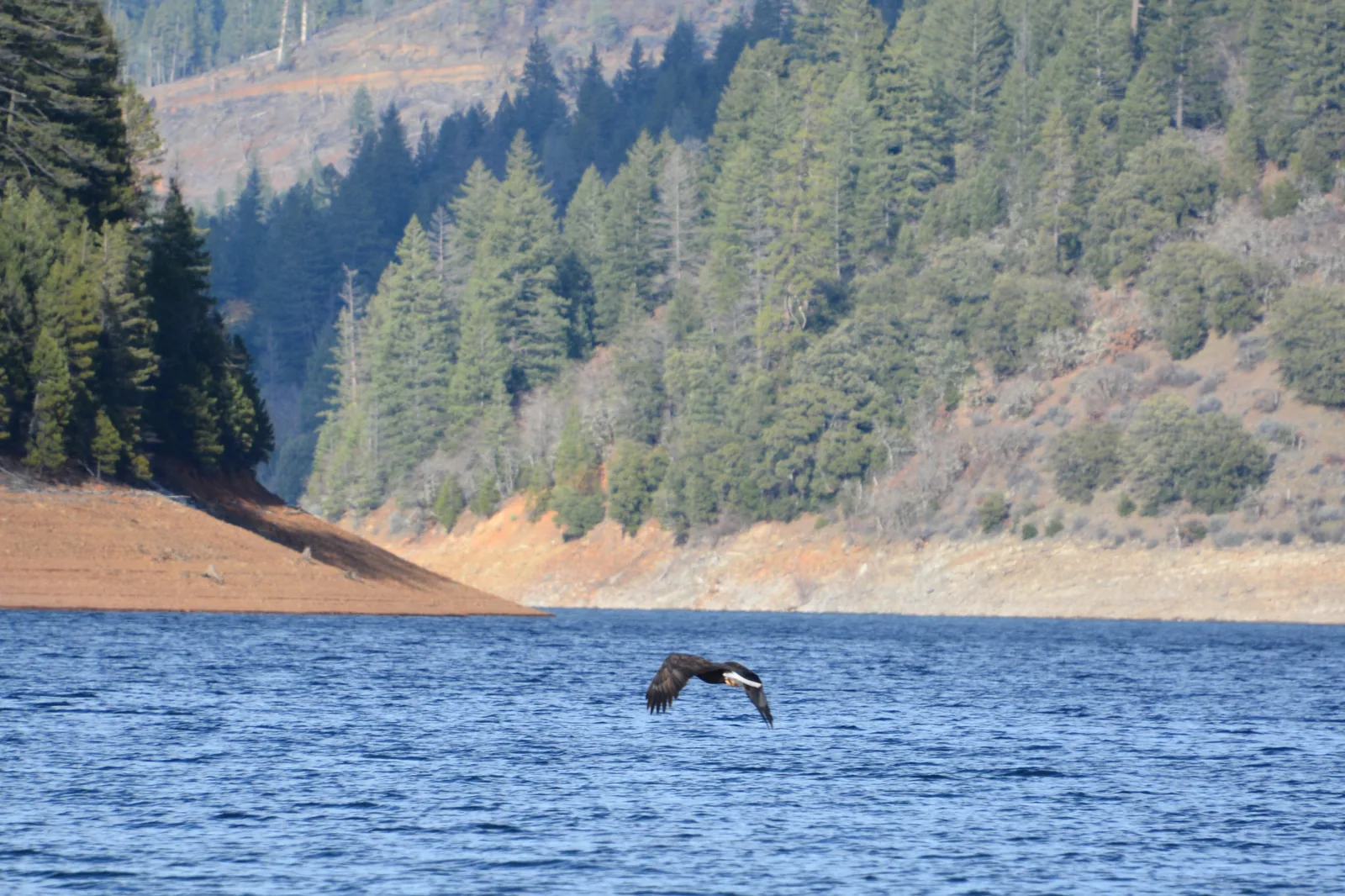
Bald eagles nest along Lake McDonald and McDonald Creek year-round. The lake's cold, clear water and abundant fish population make it exceptional eagle habitat — you can regularly watch them hunt from the shore, swooping low over the surface to take trout with their talons.
Adult bald eagles are unmistakable: white head and tail, dark brown body, wingspan up to 8 feet. Juveniles lack the white head and can be confused with golden eagles — look for the larger, broader wing shape and the distribution of white feather patches underneath.
Osprey are also common on the lake and are sometimes confused with eagles — osprey have a distinctive white underbody with dark wing patches, and fish exclusively by plunge-diving, while eagles tend to snatch from the surface.
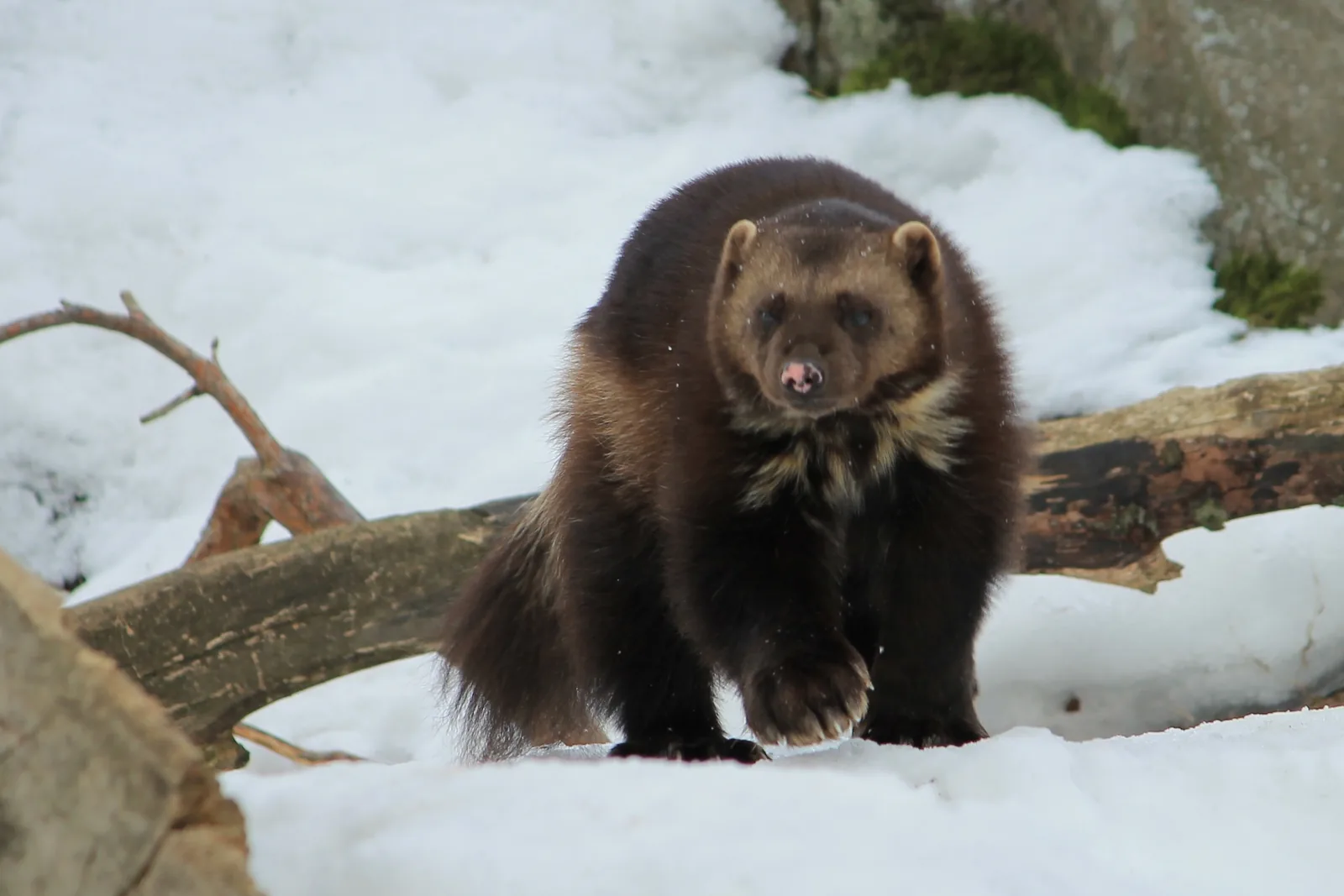
The wolverine is the largest land-dwelling member of the weasel family and one of the most elusive animals in North America. Glacier National Park is one of the few places in the lower 48 where wolverines maintain a viable breeding population — but a sighting is genuinely rare and should be considered a once-in-a-lifetime event.
Wolverines inhabit the high alpine and subalpine zones, following snowpack through the year. They require large home ranges and persistent deep snow for denning. They are sometimes seen crossing snowfields on the Going-to-the-Sun Road corridor during spring, and occasionally in the backcountry at high elevation.
If you see a wolverine, it's usually moving quickly with a distinctive bounding gait. They're roughly the size of a medium dog, with dark brown fur, pale face mask and yellow stripes along the sides.
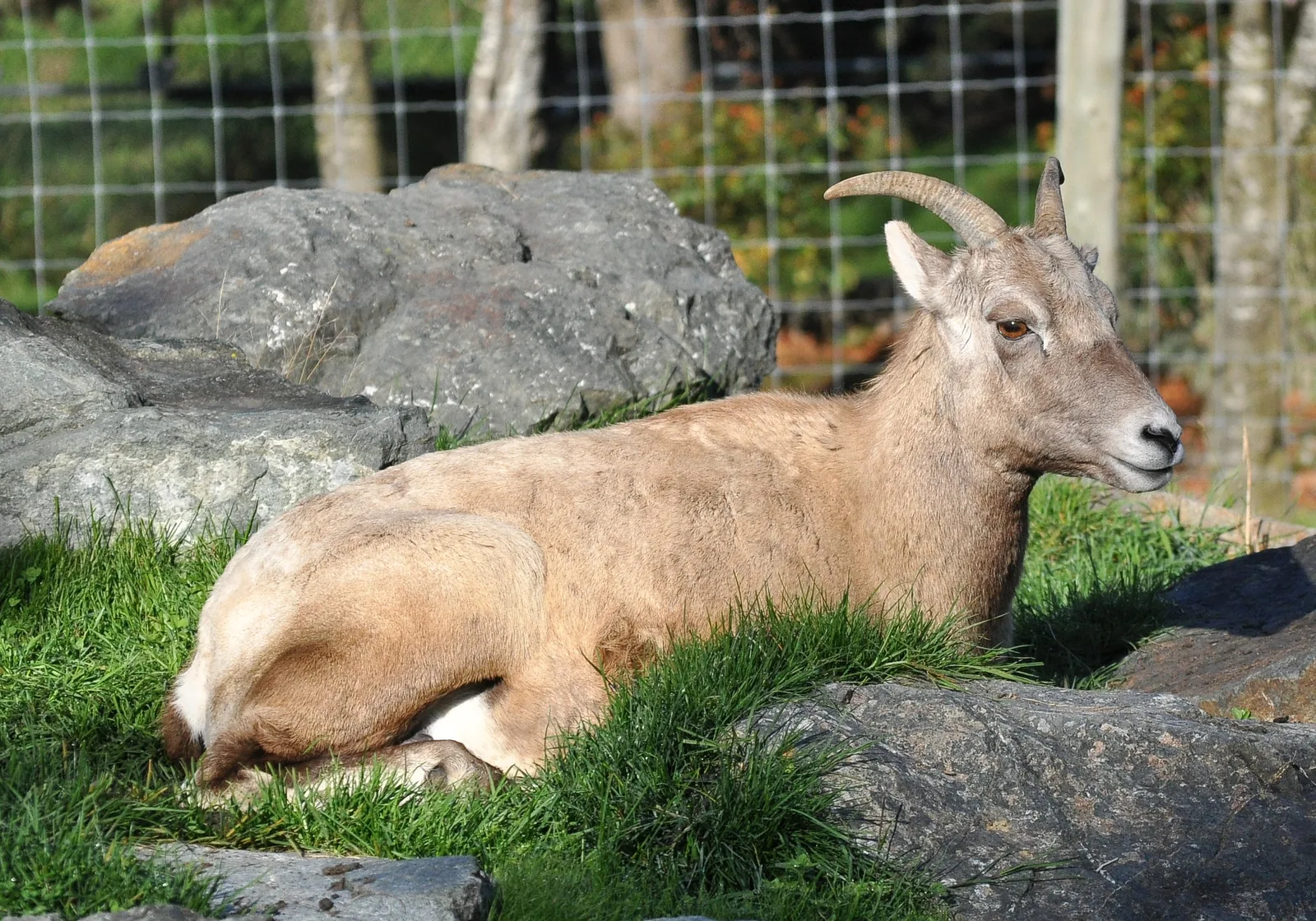
Bighorn sheep are most common on the drier, more open terrain of Glacier's east side — particularly in the Many Glacier area and along the Sun Point and St. Mary corridors. On the western side near Lake McDonald, they are less frequently seen but do occur on the exposed rocky slopes above treeline.
Bighorn rams are instantly recognizable by their massive curling horns, which can weigh up to 30 pounds and account for up to 10% of their body weight. Ewes have shorter, less curved horns. Both sexes have a distinctive pale rump patch.
The best time to see bighorn sheep is September through November during the rut, when rams compete with dramatic head-butting clashes at speeds up to 40mph — an extraordinary spectacle if you're in the right place.
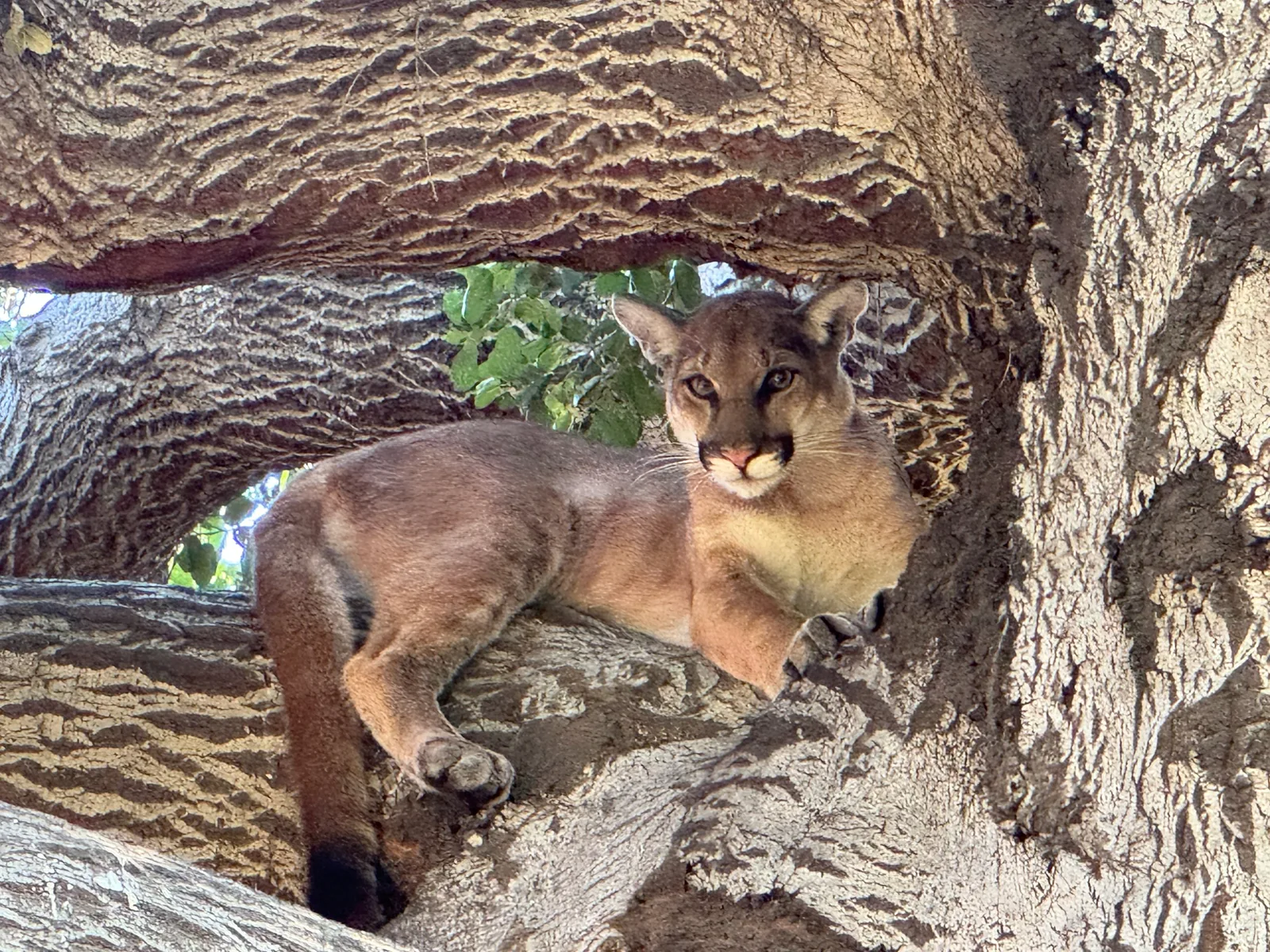
Mountain lions are present throughout Glacier National Park but are extremely rarely seen. As obligate ambush predators, they are masters of concealment and are almost always aware of humans long before humans are aware of them. Most evidence of mountain lions in the park comes from camera traps, tracks and occasional scrapes.
If you see a mountain lion — a tawny-colored cat, adult size of a large dog with a long tail — do not run. Make yourself appear large, make noise, and back away slowly while facing the animal. Encounters are exceptional; attacks are exceedingly rare.
Best Viewing Locations Near Lake McDonald
| Location | Best Species | Best Time |
|---|---|---|
| McDonald Creek corridor | Moose, bald eagle, osprey, black bear | Dawn & dusk, May–Oct |
| Apgar & lake shore | Bald eagle, osprey, great blue heron, deer | Early morning, year-round |
| Going-to-the-Sun Rd (west) | Grizzly bear, black bear, mountain goat, deer | Dawn & dusk, June–Oct |
| Logan Pass area | Mountain goat, hoary marmot, pika, golden eagle | Late morning, July–Sept |
| North Fork Flathead River | Moose, black bear, wolf (rarely), osprey | Dawn, May–Oct |
| Avalanche Lake area | Black bear, deer, mountain goat (cliff above) | Early morning, July–Sept |
| Lake McDonald Lodge docks | Bald eagle, osprey, common loon | Early morning, June–Sept |
Bear Safety — What to Know Before You Hike
- Carry bear spray in an accessible hip holster — not in your pack. Know how to deploy it before you leave the trailhead. It is more effective than firearms as a deterrent against charging bears.
- Make noise on the trail, especially in dense vegetation and near running water where bears can't hear you approach. Talk, clap, call out "Hey bear" — surprise encounters are the most dangerous.
- Hike in groups. Solo hiking significantly increases risk. Bears are far less likely to approach groups of three or more people.
- Never run from a bear. Running triggers a predatory chase response. Stand your ground, make yourself large, speak firmly and back away slowly.
- If a grizzly charges: deploy spray when the bear is 30–60 feet away. Aim slightly downward to create a cloud between you and the bear. If contact is made, play dead — face-down, hands behind neck, spread your legs to make it harder to flip you. Stay still until the bear leaves.
- If a black bear charges: do not play dead. Fight back aggressively targeting eyes and nose. Black bear attacks are almost always predatory, not defensive.
- Store all food and scented items (sunscreen, lip balm, snacks) in bear boxes or bear-resistant canisters. Food rewards teach bears to associate humans with food — a dangerous outcome for both the bear and future visitors.
Wildlife Watching Ethics
The NPS minimum viewing distance is 100 yards from bears and wolves and 25 yards from all other wildlife. These are minimums — use your judgment and err further away. A spooked moose or an approaching grizzly doesn't care about your camera settings.
Never feed wildlife. Ever. A bear or mountain goat that approaches humans for food has been trained by humans to do so, and that animal will eventually have to be euthanized. "A fed bear is a dead bear" is literally true.
Use a telephoto lens. The best wildlife photographs are taken with appropriate distance — the animal behaves naturally, you stay safe, and the image is better for it. A 300mm lens or longer is the minimum for meaningful wildlife photography in this landscape.